
Scope confusion still stalls the estimate
Surface areas, prep requirements, and coat counts live in notes and texts. Estimating cannot finish until you reconstruct what was actually included.
Painting Contractors · Los Angeles & Southern California
Connect site visits, estimates, change orders, scheduling, production handoff, and job visibility so work can keep moving without every answer coming back to you.

The operating reality
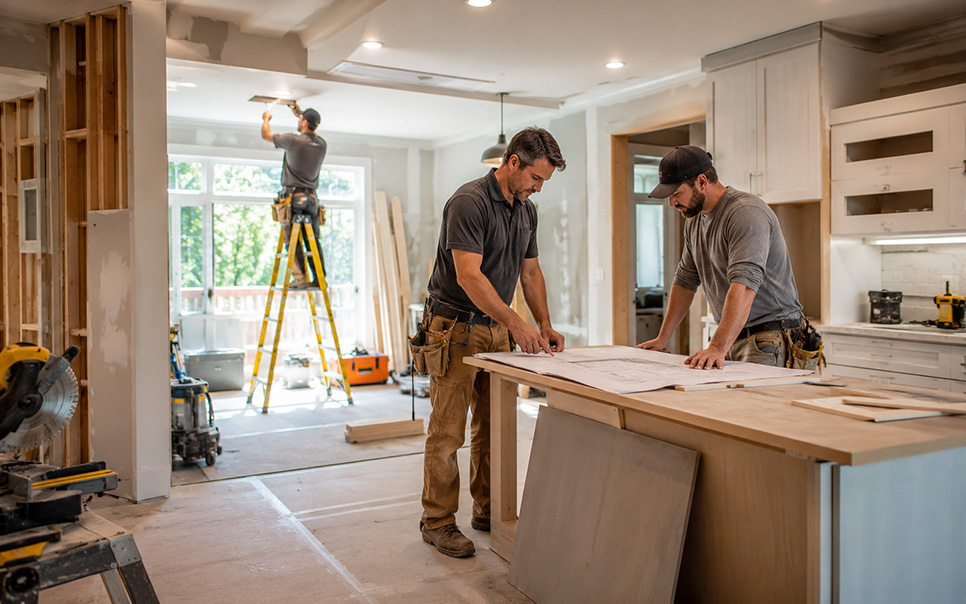
The estimator is still reconstructing yesterday’s walk-through. The office is not sure the extra room made it onto the proposal. A crew is waiting on primer, sheen, or prep notes. A homeowner change lives in a text. Production status means calling someone. The information often exists. It just does not live in a place the office, the estimator, or the crew can use without you.
Answering those questions today does not fix the operating model that will recreate them tomorrow.
When scope, product details, and handoffs are unclear, the owner becomes the person connecting the office, the estimator, and the crew. That is not a people problem. It is an operating-model problem.
Surface areas, prep requirements, and coat counts live in notes and texts. Estimating cannot finish until you reconstruct what was actually included.
Additional rooms, repairs, and extra coats stay in email and texts. Billing and production wait on you to confirm what changed after the original proposal.
Primer, sheen, color, and surface notes scatter across devices. Ordering and the first coat wait until you confirm what the crew is supposed to apply.
Sold jobs reach crews without photos, product specs, or schedule details. You fill the gap between the office and the field before production can start cleanly.
When estimates, scope notes, change orders, prep details, and production status live in scattered threads, the owner becomes the handoff between the office, estimators, and crews. Yoeweb helps define who owns each stage—office, estimator or production lead, crew, and owner—so work can move without every decision returning to one person.
BOS Setup is where that operating model lives—connecting office staff, estimators, production leads, and crews around the same job information.
Built for painting teams that need clear communication between owners, office staff, estimators, production leads, and field crews—including bilingual workflows when needed.
Each transition needs a clear owner, the right information, a known next step, and visibility for the people involved. Painting teams repeat this path on interiors, exteriors, and commercial work.
01
Residential and commercial inquiries captured so follow-up is not memory-based.
02
Jobsite conditions, access notes, and photos on a record the office can use.
03
Surface areas, room counts, prep requirements, and coat counts before estimating starts.
04
Proposals built from the same scope, products, and prep—not reconstructed from texts.
05
Customer sign-off and change orders on the job before production is scheduled.
06
Crews, materials, and job sequences aligned from the same record.
07
Scope, product specs, photos, and prep notes with the crew before the first coat.
08
Walkthroughs, punch items, and remaining work visible without calling the owner.
BOS Setup
The operating model is clarified first. Ownership among the office, estimators, crews, and owner is defined. Then BOS Setup becomes the place where that model can run consistently—so estimating, scope, change orders, scheduling, production handoff, and job visibility share the same record.
The system gives people a shared picture of the job. It does not replace the judgment required to read a surface, price a change, or decide what the crew should do next.
Estimating
Proposals built from the same walk-through, measurements, and prep notes.
Scope
Surface areas, coat counts, and included work on one job record.
Change orders
Extra rooms, repairs, and added coats visible before production continues.
Scheduling
Crews, materials, and job sequences aligned from the same picture.
Production handoff
Photos, product specs, and prep notes with the crew before the first coat.
Job visibility
A shared view of where the job stands—without calling the owner.
A website stays useful when it supports how work already moves—estimate requests and a clear way to start a conversation—not when it becomes a separate marketing layer.
The infrastructure where estimating, scope, change orders, scheduling, production handoff, and job visibility can run with clearer ownership.
Explore BOS SetupA professional site that supports estimate requests and trust—without turning the page into a marketing campaign.
Learn moreYoeweb brings the operating method, sequencing, and industry understanding required to translate how painting work actually moves—from estimate through production—into a system the team can use.
We start with how work actually moves—who owns the estimate, who owns the change, who owns the crew handoff, and what information has to travel with each step.
That model is then implemented in BOS Setup so the office, estimators, production leads, and crews can work from the same picture.
The aim is not more software. It is fewer questions that only you can answer—and more space for the judgment a surface, a change order, or a crew still requires.
Owner dependency shows up when estimates, scope notes, surface prep, product details, change orders, scheduling, and production handoff live in separate threads. The information may exist, but ownership among the office, estimator, crew, and owner is unclear—so routine questions return to the same person. That is an operating-model problem, not a people problem.
Yoeweb starts with clarity: how work currently moves from site visit to estimate to crew, who owns each handoff, and what the team needs at each stage. Then ownership and workflows are defined. BOS Setup is the infrastructure where that operating model can run—so the team can move jobs without waiting on the owner to carry every estimate and production detail.
BOS Setup is not the first conversation. It is where the operating model lives once ownership and workflows are clear—connecting estimating, scope, change orders, scheduling, production handoff, and job visibility around the same record. It gives people a shared picture. It does not replace the judgment required to read a surface or decide what extra work should cost.
Extra rooms, repairs, primer, sheen, and prep notes should travel with the original scope—so the office, estimator, and crew work from the same record instead of reconstructing a change from a text.
Explore contractor industries with similar operational handoffs, field coordination, estimating, scheduling, and owner-dependency challenges.
Keep scope, selections, and change orders on one record so office, subs, and crews aren’t waiting on the owner to reconstruct the job.
See jobs, proposals, and handoffs in one place so the business can run without you everywhere.
Keep measurements, specs, and installs aligned so the owner is not the handoff.
Clarify ownership and workflows first. Then put the operating model in BOS Setup so the office and crews can move jobs without every decision coming back to you.
Supporting painting contractors across Los Angeles County, Orange County, the Inland Empire, and Southern California.